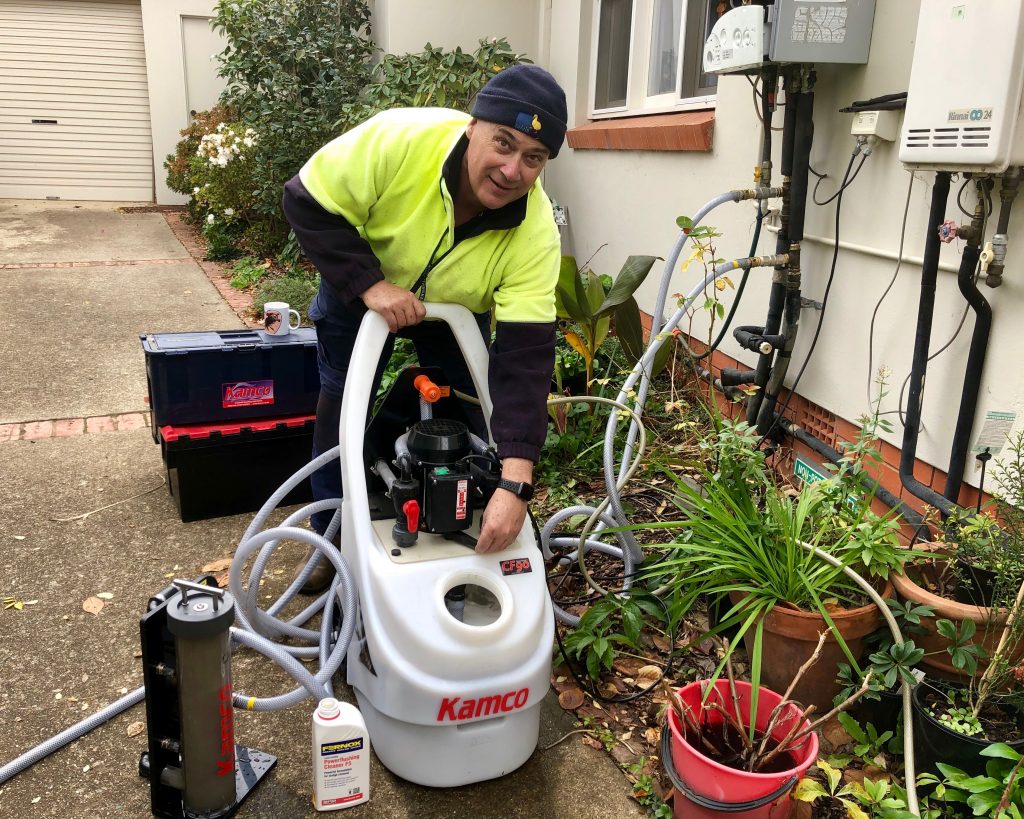
Do I need a Power Flush? Depends on the level of sludge in a system, but if a system has never had a Power Flush carried out, then it would more than likely benefit from having one. If you a fitting a new boiler on an existing system, most manufacturers state its mandatory to Power Flush the system.
What is sludge? Sludge is a cumulative name for rust, debris and magnetite found in hydronic heating system water.
Does Power Flushing systems work? Yes, Power Flushing cleans hydronic heating systems from the inside, reducing sludge found within. This stops further damage to boilers, pumps, pipework, panels, manifolds and valves, reducing future breakdowns related to the build-up of sludge.
Will a Power Flush increase my central heating’s efficiency? Yes, but the amount depends on how much sludge it had in it before the flush was carried out.
How long does it take to do a Power Flush? It depends greatly on how much sludge is in the system and the system size. However, a basic idea: Half a day for a small system (0-6 panels), and a full day for a large one (6-12 panels).
Can I just drain the system down and refill it instead of Power Flushing it? If you have a real sludge problem “NO”. Sludge is metallic rust and the bits causing problems are large clumps that are heavy. Draining a system down will only get rid of the finest lightest sludge; the real problem will be left behind, Just because the water runs clean does not mean all the sludge is out. Some plumbers will do a chemical flush; they add a chemical, days after draining the system down. It doesn’t always work because there is no increase in the water’s flow rate and draining happens through just one flow path, when there are many flow paths in the system, It will help a little if the problem is small but 90% of the time, you are wasting time and money. It is better to carry out a Power Flush from the start.
What happens if I don’t Power Flush my hydronic heating system? Boilers can become so damaged that they’ll be deemed uneconomical to repair, requiring a replacement. The efficiency of the system can be affected, costing you lots of money in fuel usage as well as repair bills. Sludge can cause the mechanical failure of pumps, motorized values, heat exchangers and cause pin holes to form in radiators.